From Banking to Energy: How the Consumer Data Right (CDR) Helps Australians Compare with Confidence
See how Consumer Data Right uses eligible historical energy data to help create more personalised plan-cost estimates, with consent and privacy controls built in.
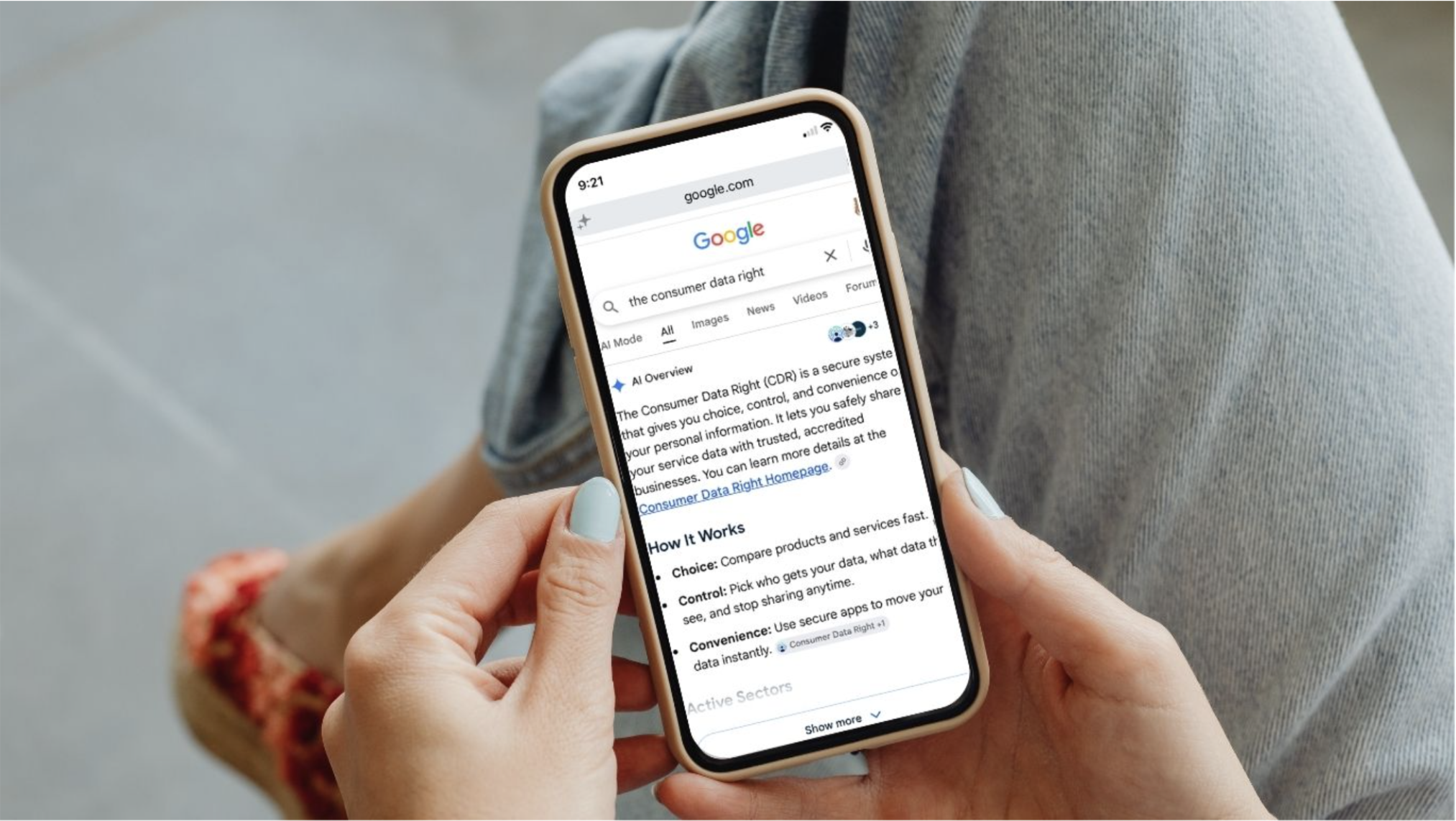
If you have ever linked your bank account to a budgeting app, checked your spending on a money management tool, or applied for a loan online and had your income verified in seconds, you may already have used Consumer Data Right technology, depending on how that service accessed your data.
It is now doing the same job for energy comparison, and it’s the reason One Click Switch can produce a personalised savings estimate based on your historical energy usage rather than relying only on generic assumptions.
Before 2020, one of the common ways for an app to see your financial or account data was for you to hand over your login and let it copy what it saw off the screen. The Consumer Data Right introduced a regulated, consent-based alternative for sharing data.
You choose what data is shared and for what purpose, and the CDR has strict rules around consent, privacy and information security.
Banking got this first. Energy got it next.
Here is how that same infrastructure ended up underneath your energy comparison.
What the Consumer Data Right actually is
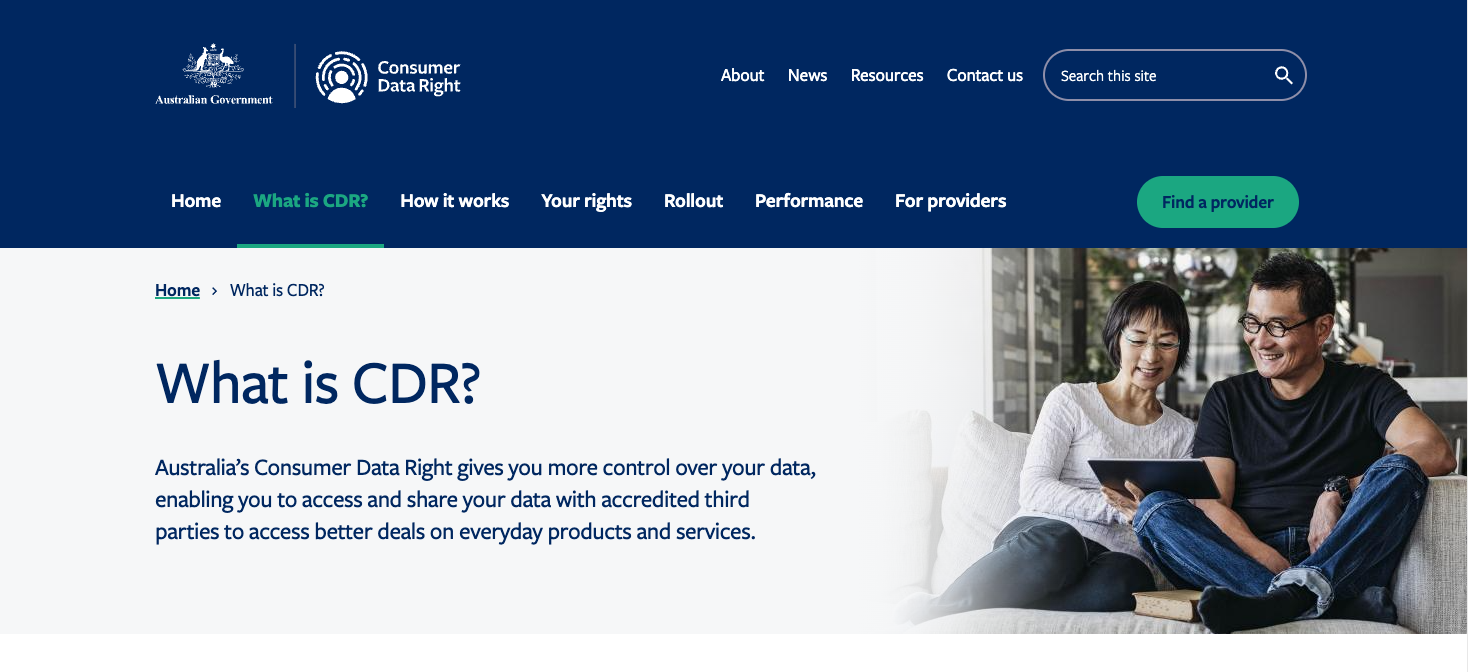
The Consumer Data Right, usually shortened to CDR, is an Australian data-sharing framework that gives you greater control over certain data held about you and lets you securely share eligible data with participating services of your choice. It was legislated in August 2019, following recommendations from a string of government inquiries into competition and consumer data access, including the Murray, Harper, Coleman and Finkel reviews (ACCC; Duke University FinReg Blog).
Banking, known as Open Banking, was first. Data sharing went live on 1 July 2020, and more than 110 banks now let customers share their financial data safely under CDR, without handing over a password to anyone (Frollo). It is the technology behind budgeting apps like Frollo, and behind lenders that can assess your finances in minutes instead of asking for a stack of bank statements.
Frollo’s 2025 State of Open Banking report states that Australians using money-management apps save an average of $330 a month, with account balances increasing 13% and savings growing 21% after three months. Those figures relate to Frollo users and should not be taken as an indication of potential energy savings. What carries across to energy is the underlying principle: CDR can use your actual data to support a more personalised comparison.
How it moved from banking to energy
The government announced energy would be added to the CDR back in May 2018. Product data sharing (the plans and prices retailers offer) began on 1 October 2022, and consumer data sharing (your actual usage and billing history) went live on 15 November 2022, starting with the three largest retailers: AGL, Origin and EnergyAustralia (cdr.gov.au).
Any retailer with 10,000 or more small customers on the National Electricity Market had to join by 1 November 2023. Smaller retailers are not required to participate unless they choose to, which is worth knowing since it means CDR coverage still depends on who you are with today, not just who you are considering switching to.
The world's first transfer of open energy data under CDR happened between Origin Energy and Fiskil, the accredited data provider One Click Switch uses, on 10 November 2022, days ahead of the official launch (Australian FinTech). One Click Switch participates in the CDR through a CDR representative arrangement with Fiskil, our CDR Representative Principal and Accredited Data Recipient. With your consent, eligible energy data can be collected through this arrangement and used by One Click Switch to provide your comparison.
Energy data actually comes from two different places. Your retailer holds your customer, account, billing and tariff data. The Australian Energy Market Operator, or AEMO, separately holds your metering data, since it runs the national metering system that retailers themselves plug into. CDR allows relevant retailer-held and metering data to be used together, helping provide a more detailed picture of a household's energy usage (cdr.gov.au).
Why CDR provides an alternative to sharing your password
Before CDR, the common workaround for apps that needed your financial or account data was screen scraping: you would hand over your online banking or account login, and the app would log in as you and copy what it saw off the screen. Treasury's own 2022 Statutory Review flagged this as a genuine security risk, since it works against standard cyber security advice, increases the damage a data breach can do, and gives away far more than the app actually needs (Treasury).
CDR provides a different way to share your data. Instead of giving your login credentials to the comparison service, you authenticate through the relevant provider and authorise the data sharing. You choose what eligible data can be shared and can withdraw your consent.
Treasury consulted on the future of screen scraping in 2023. In March 2025, the Australian Government flagged an intention to move towards a ban of screen scraping, but a formal ban has not yet been implemented (Treasury Ministers).
Why precision actually matters when you are comparing energy
Energy comparison methods vary. Some use bill information, user-entered usage or typical household assumptions.
The problem is that most households are not typical. Where available, CDR allows historical usage information to be incorporated into the comparison.
Because One Click Switch can incorporate your historical electricity usage, including information about how much electricity you use and when, the resulting estimate can reflect your household’s past usage patterns rather than relying only on generic household assumptions. That is a meaningfully different number for a share house, a family running two air conditioners, or a household with solar and a battery.
It's the same principle behind identifying which appliances Victorian households could consider shifting into the free three-hour window under the Midday Power Saver.
Where CDR is headed next
CDR is not standing still.
Non-bank lenders join the system next: product data sharing began on 13 July 2026. Consumer data sharing begins from 9 November 2026 for initial providers, with qualifying large providers following from 10 May 2027 (Consumer Data Right).
Every new sector goes through the same staged process: a designation, then product data sharing, then consumer data sharing, usually starting with the largest providers and working down.
What this means when you compare with One Click Switch
When you use One Click Switch, you are not asked to guess your usage and hope the estimate is close.
With your consent, which you can withdraw at any time, we securely pull your real usage history through CDR and compare it against available plans, ranked cheapest* first, with no sponsored placements. It takes about 5 minutes, and it is the same category of technology now underpinning budgeting apps, faster loan approvals and, soon, a much wider slice of Australia's financial and utility comparison market. One Click Switch has commercial relationships with the retailers we compare, including receiving a fee when you switch. These relationships do not influence how results are ranked.
See your personalised savings estimate using your historical energy usage.
Quick-Reference: CDR Sector Rollout
*cheapest = the lowest comparison or reference price (depending on state) as provided by the retailers on panel.


