Not Heard of That Energy Retailer? Here's How to Check They're Legit
Got a result from a retailer you don’t recognise? Learn how to check their authorisation, business details, customer track record and scam warning signs before you switch.
You ran a comparison, got your results, and one of the lowest estimated-cost plans available through One Click Switch is with a retailer you've never heard of. Before you do anything else, you open a new tab and start Googling the name.
We get it, and that’s why we have written this post: to help you check who the retailer is, and what else to consider before you decide.
One Click Switch ranks results cheapest* first, based on the estimated cost calculated using the information available for your comparison. We don't offer sponsored placements or allow referral arrangements to determine the initial ranking of results. One Click Switch has commercial relationships with the retailers on our panel, including receiving a fee when a customer switches through our service. This does not affect how results are ranked.
That can mean a lower-priced plan comes from a retailer you don't immediately recognise.
Unfamiliar is not the same as untrustworthy. Brand recognition alone doesn't tell you whether a retailer is properly authorised or what its customer service record is like.
A better way to assess a retailer is to check the information available from official regulators and independent sources, rather than relying on whether you recognise the name.
Brand familiarity can be influenced by factors such as how long a retailer has operated, where it operates and how much it markets itself. Familiarity alone isn't a measure of reliability.
The checks below are the same ones worth running on a big name too; they just tend to matter more when the name is new to you.
Check one: are they authorised or licensed to sell energy where you live?
This is one of the most important checks.
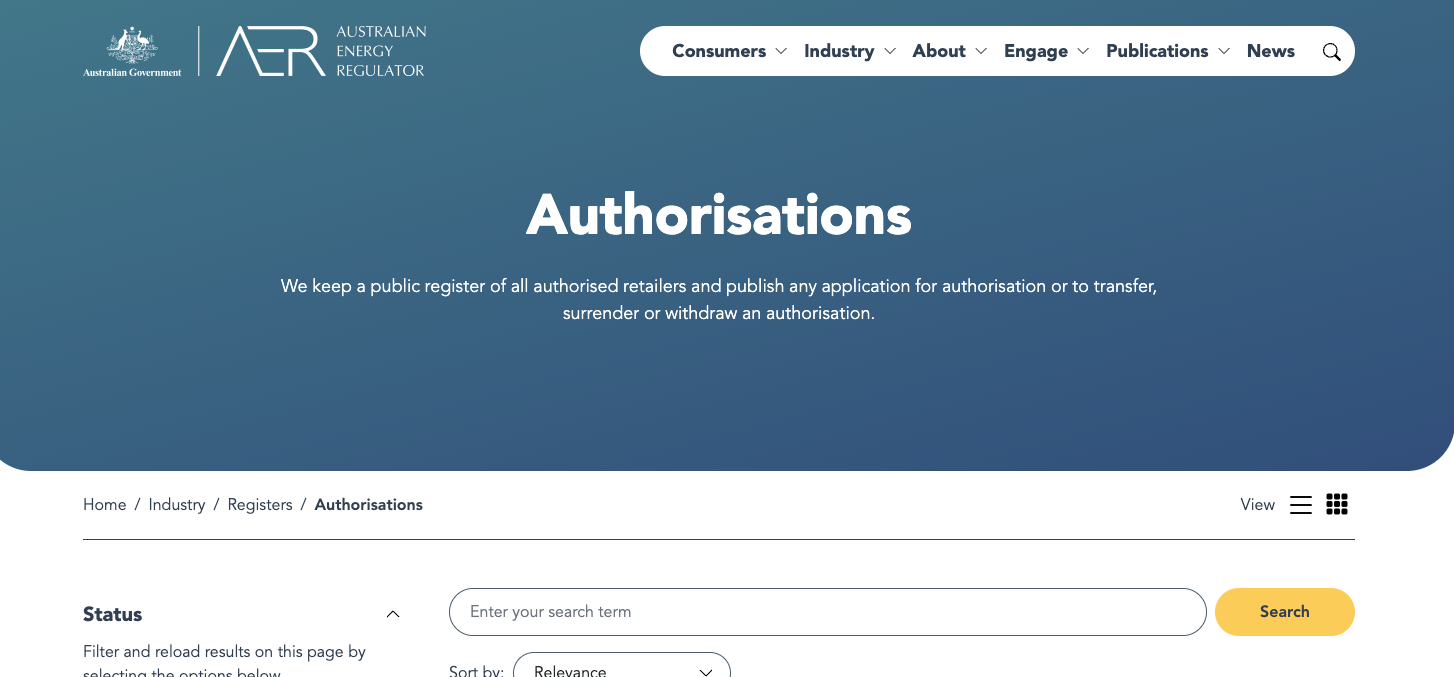
Energy retailers need the appropriate authorisation or licence to operate in the jurisdictions they serve. In the ACT, NSW, Queensland, South Australia and Tasmania, retailer authorisations are administered by the Australian Energy Regulator (AER), which maintains a public register of authorised retailers (AER Authorisations register).
Victoria operates under its own energy retail framework, with electricity and gas retail licences administered by the Essential Services Commission. Other jurisdictions also have their own regulatory arrangements.
Check the retailer against the regulator that applies where you live. If you can't confirm that they're appropriately authorised or licensed, don't proceed until you've clarified it.
Note: Retailers available through One Click Switch must be appropriately authorised or licensed to sell energy in the jurisdictions where they operate.
Check two: is there an independent dispute-resolution service?
Energy customers have access to an independent ombudsman or dispute-resolution body in their state or territory. If you have a problem with a retailer that you can't resolve directly, the relevant service may be able to help free of charge.
The appropriate body depends on where you live. For example, NSW has the Energy & Water Ombudsman NSW, Victoria has the Energy and Water Ombudsman Victoria, Queensland has the Energy & Water Ombudsman Queensland, while ACT energy disputes can be handled by the ACT Civil and Administrative Tribunal.
You can check the current energy.gov.au list to find the appropriate service for your state or territory.
Check three: verify the business behind the brand
You can also check the legal entity behind the retailer. ABN Lookup provides free access to public Australian Business Number information, while ASIC's registers can be used to check registered companies and business names. (ABN Lookup; ASIC, Check another business is trustworthy).
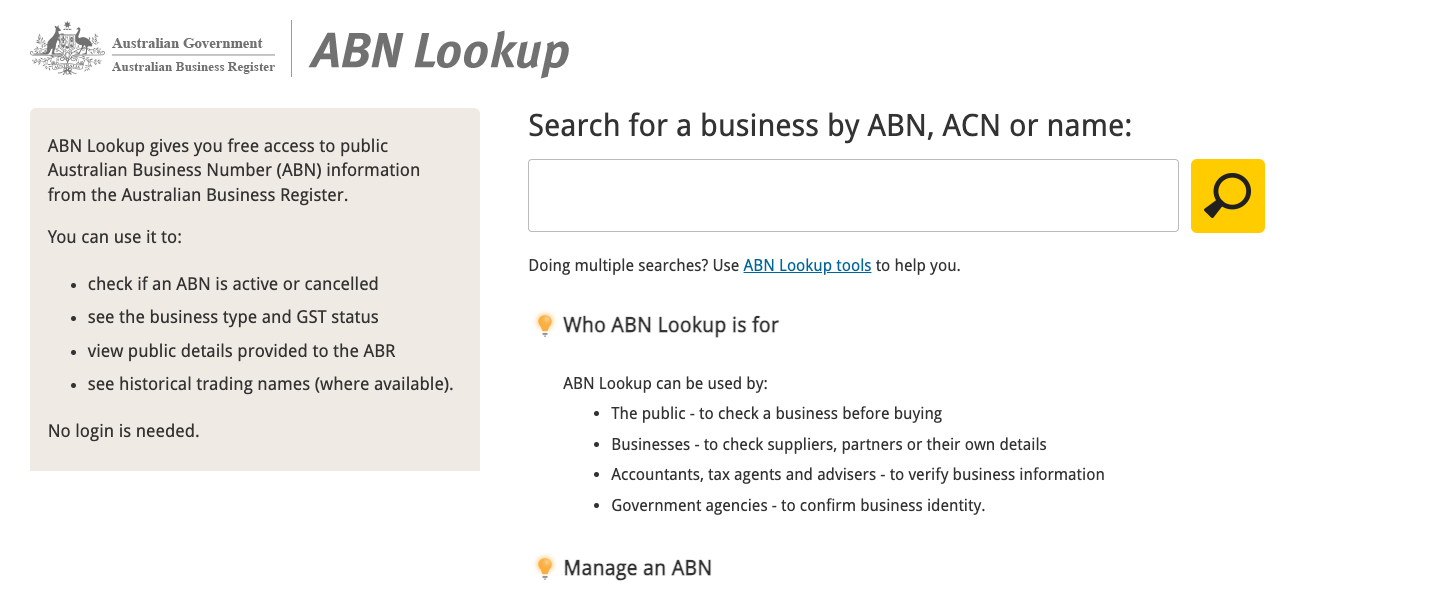
Check whether the retailer brand can be clearly linked to the legal entity shown in ABN Lookup or ASIC's registers. A different legal entity name isn't necessarily a red flag, because businesses can operate under registered business names. What matters is that the relationship is clear and verifiable. Keep in mind that appearing on a government business register doesn't, by itself, guarantee that a business is trustworthy, which is why it's worth using several of the checks in this guide.
Check four: look at their actual track record, not just their size
Regulators publish information that can help you understand how retailers are performing. In jurisdictions covered by the National Energy Retail Law, the AER publishes information on areas including complaints, payment difficulties, hardship programs, disconnections and reconnections (AER retail performance reporting). Victoria has separate market-performance reporting through the Essential Services Commission.
The information available varies by jurisdiction, but it can give you another source of evidence alongside licensing information and customer reviews.
Check five: test their customer service before you switch
Energy retailers are subject to complaints-handling requirements under the rules that apply in their jurisdiction. Look for a clearly published complaints process and contact information, as well as information about how unresolved complaints can be escalated.
If you can't find clear complaints or contact information, that's a reason to investigate further before switching.
Beyond the regulatory checks, testing a retailer's support channels can give you additional insight into what the customer experience may be like.
You can also check independent review platforms, such as ProductReview.com.au but treat reviews as one source of information rather than proof that a retailer is legitimate or suitable. Look for recurring themes across a number of reviews rather than relying on a single positive or negative experience.
These checks can provide information about the customer experience that won't necessarily appear on a licensing register.
Brand recognition doesn't determine your legal protections
Your energy consumer protections come from the laws and rules that apply where you live, not from how recognisable the retailer's brand is.
In jurisdictions covered by the National Energy Customer Framework, these protections include a 10-business-day cooling-off period for market contracts, requirements around hardship support and rules limiting when customers can be disconnected. Victoria, Western Australia and the Northern Territory operate under local regulatory frameworks with their own consumer protections.
Within the same jurisdiction, the applicable baseline consumer-protection rules apply regardless of whether the retailer is a household name or one you have only just discovered.
Red flags that have nothing to do with being unfamiliar
There is a difference between ‘I haven't heard of this retailer’ and ‘this may be a scam’. Scamwatch has warned about scammers impersonating energy providers through fake bills and unexpected calls, including demands for urgent payment, threats of disconnection and attempts to obtain personal or financial information. Fake communications can also copy the branding of genuine energy companies (Scamwatch).
If you receive unexpected or suspicious contact, verify it independently. Find the retailer's official contact details yourself rather than relying on the phone number or link contained in the message (Scamwatch).
What this means when you compare with One Click Switch
Retailers available through One Click Switch must be appropriately authorised or licensed to sell energy in the jurisdictions where they operate, whether you have heard of them or not.
One Click Switch uses the household and usage information available, through CDR, to provide personalised plan-cost estimates (you can read our blog post on that here). Plans are initially ranked from cheapest to most expensive, and sponsored placements or referral arrangements don't determine the initial ranking.
If the cheapest* plan for your household happens to be with a name you do not recognise, we encourage you to spend a few minutes checking them out, and now you know exactly how.
Find your savings, and use these checks if you want to learn more about an unfamiliar retailer before you switch.
Quick-Reference: How to Check Any Energy Retailer Before You Switch
*cheapest = the lowest comparison or reference price (depending on state) as provided by the retailers on panel.


